

At my clinic inside the Light Centre in Belgravia, a five minute walk from Victoria station, acupuncture for painful periods is used to treat the pattern producing the pain rather than to mask the pain itself. In Traditional Chinese Medicine, period pain is read mainly as cold in the uterus, stagnant Liver Qi, blood stagnation, or an underlying deficiency, and each of those is approached with a different formula. Treatment is usually timed to the week before bleeding rather than delivered at random, and it is reviewed over two to three cycles. The most important step comes first: establishing whether your pain is primary or secondary, because that decides whether you need investigation as well as treatment.
The clinic is running online consultations only until 31 August. In-person acupuncture appointments resume on 1 September, and herbal medicine continues as normal throughout.
There is a sentence I hear more than any other in this clinic, and it is always delivered as an apology.
“I know everyone gets period pain, but mine is quite bad.”
The apology is the problem. Somewhere between the first period and the tenth year of them, a great many women absorb the idea that menstrual pain is a tax rather than a symptom, and that reporting it is a form of complaining. So the vomiting gets managed privately, the day off gets logged as a migraine, and the pain never gets described accurately to anyone who could do something about it.
Here is the clinical position, plainly. Mild cramping in the first day or two is common and physiological. Pain that makes you vomit, pain that does not respond to over the counter medication, pain that is getting worse year on year, or pain that costs you a working day every single month is none of those things. It is a symptom, it usually has an identifiable cause, and it is worth investigating.
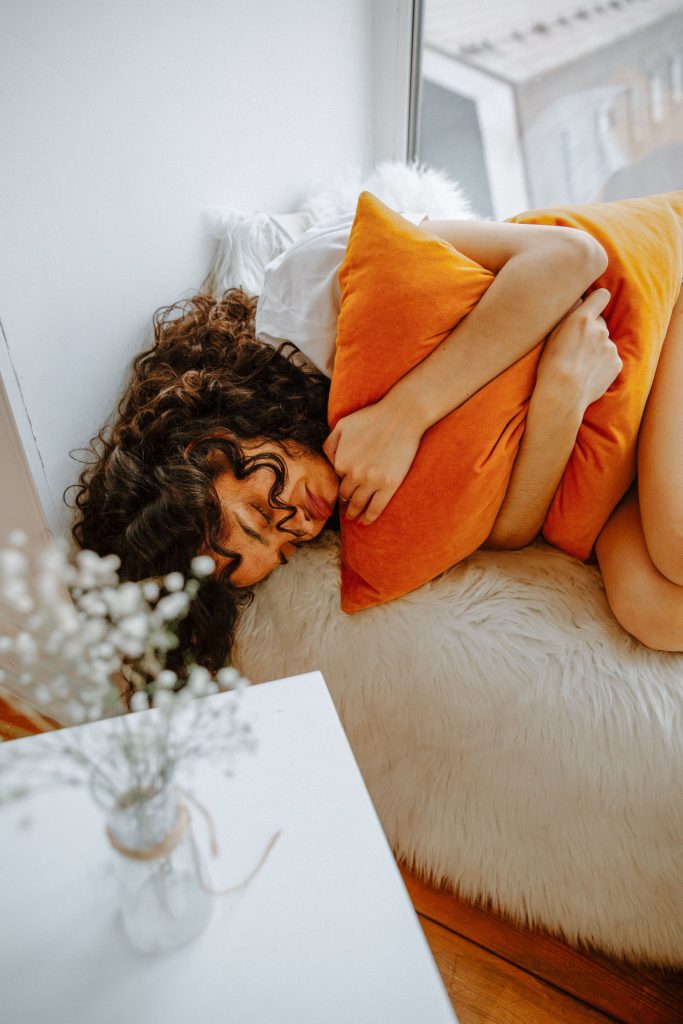
Primary or Secondary: The Distinction That Changes Everything
This is the single most useful thing on this page, and it is the thing almost no clinic website explains.
Primary dysmenorrhoea is period pain with no underlying pelvic disease. It typically starts within a year or two of your first period, arrives with or just before the bleed, sits low in the abdomen and often the lower back and thighs, and eases within two or three days. The mechanism is prostaglandin-driven uterine contraction. This is the group where Chinese medicine tends to do its most satisfying work, because there is nothing structural to remove and a great deal of function to correct.
Secondary dysmenorrhoea is period pain caused by an identifiable condition, most commonly endometriosis, adenomyosis, fibroids, or pelvic inflammatory disease. The pattern is different and the differences are recognisable:
Feature | Points towards primary | Points towards secondary |
|---|---|---|
When it started | Teens, within a year or two of the first period | Later, often twenties or thirties, after years of manageable periods |
Trajectory | Stable, often eases after childbirth or with age | Getting worse year on year |
Timing of pain | Starts with the bleed, eases in 2 to 3 days | Starts several days before, may persist after bleeding stops |
Pain outside the period | Rare | Common, including pain with sex, bowel movements, or ovulation |
Response to NSAIDs | Usually helps | Often inadequate |
Other symptoms | Few | Heavy bleeding, bowel or bladder symptoms, difficulty conceiving |
If your pattern sits in the right-hand column, the priority is a GP referral for investigation, not a course of acupuncture. Endometriosis in particular is diagnosed late far too often, and part of the reason is that women present the pain apologetically and clinicians hear “bad periods” rather than the actual pattern. Chinese medicine can run alongside that investigation and frequently does, but it is not a substitute for it.
What Most Women Get Wrong About Period Pain
They treat the pain on the day. Taking something once the cramping has started is the least effective moment to intervene. The useful window in Chinese medicine is the week before bleeding, which is why treatment is timed to the cycle rather than booked whenever there is a free appointment.
They assume nausea is unrelated. It is not, and it is far more common than most women realise. Nausea and vomiting with periods are a recognised feature of dysmenorrhoea, and in TCM terms they usually indicate that constrained Liver Qi is disrupting the Stomach, which is a specific pattern with a specific treatment approach. If you are being sick every month, say so at the consultation. It changes the formula.
They interpret pain relief from heat as trivial. It is not trivial, it is diagnostic. If a hot water bottle reliably helps, that points towards cold and stagnation rather than heat, and it tells a practitioner which direction to treat in. Bring that detail with you.
How Traditional Chinese Medicine Reads Period Pain
The reasoning is different from the Western model. Rather than asking how much prostaglandin is being produced, it asks what is obstructing or failing to nourish the uterus, and it reads the answer from the quality and timing of the pain.
TCM pattern | How the pain behaves | Other signs | Classical formula family |
|---|---|---|---|
Cold congealing in the uterus | Cramping, gripping, markedly better with heat, worse for cold or cold food | Pale face, cold hands and feet, dark blood with small clots | Shaofu Zhuyu Tang, Wen Jing Tang |
Liver Qi stagnation | Distending, moving pain, worse in the two to three days before bleeding, eases once flow starts | Premenstrual irritability, breast tenderness, bloating, nausea | Xiao Yao San family |
Blood stagnation | Fixed, stabbing, worse with pressure, eases noticeably after a clot passes | Dark clotted blood, pain that is worst on day one | Formulas that invigorate blood, selected to the case |
Qi and blood deficiency | Dull, aching, dragging, better with pressure and warmth, worse at the end of the period | Tiredness, pale complexion, light flow, dizziness | Formulas that tonify Qi and blood, selected to the case |
The clinic’s own reference for painful menstruation is the Shaofu Zhuyu family, whose stated purpose is to warm the meridians, relieve pain, and improve blood circulation. That is a good illustration of how the logic works: it is not a painkiller, it is an attempt to remove the reason the uterus is cramping.
The formulas above are listed for professional reference and to show how the reasoning works. They are not intended for self-medication. Chinese herbs must be prescribed to a diagnosed pattern by a practitioner who has taken your full history and knows what else you are taking.
Note that pressure and heat are doing diagnostic work in that table. Pain that improves with firm pressure suggests deficiency. Pain that worsens with it suggests stagnation. These are opposite conclusions leading to opposite treatments, which is why a practitioner should be asking you detailed questions about how the pain behaves rather than only how bad it is.
Period Pain With Nausea and Vomiting
This deserves its own section because it is common, distressing, and almost entirely unaddressed on other clinic pages.
Nausea and vomiting during menstruation are usually related to the same prostaglandin activity that drives the cramping, which affects smooth muscle in the gut as well as the uterus. In Chinese medicine the reading is that Liver Qi, constrained in the premenstrual phase, is disrupting the descending function of the Stomach, so instead of moving downwards, Stomach Qi rebels upwards.
Practically, this matters for three reasons. It changes which formula is appropriate. It affects how herbs are prescribed, since a nauseated patient cannot tolerate a strong decoction and may do better on capsules. And it is a symptom worth flagging to your GP as well, because severe cyclical vomiting is one of the presentations that should prompt investigation for endometriosis rather than being written off.
Where Acupuncture Fits
In this clinic acupuncture is applied with the aim of regulating the cycle and easing pain, with point selection following the diagnosed pattern. Responses vary between individuals and no outcome is guaranteed. Treatment is generally timed to the luteal phase, the week or so before bleeding is due, because that is when the pattern is forming rather than when the pain is already established.
The honest review window is two to three cycles. A menstrual cycle reports back once a month, so the cycle itself is the measuring instrument, and there is no way to compress that. Anyone offering to transform your periods within a fortnight is selling rather than treating.
Herbal medicine usually carries more of the work than the needles do, and it is worth being direct about why. Acupuncture acts at the appointment. A formula acts every day of the cycle, including the premenstrual window where this condition is actually decided, and it can be adjusted between cycles as the pattern shifts. In my clinical experience the formula tends to do more of the work, with acupuncture supporting it.
At this clinic formulas are personalised rather than taken from a shelf, and prepared as powder, capsules, or tea depending on what you will realistically take consistently. The current fixed price is £80 per week, designed for a minimum course of two weeks, with complimentary UK delivery. Acupuncture sessions are £100 for 60 minutes, or £360 for a package of four.
For heavy bleeding alongside the pain, which is a common combination, the volume side of the picture is covered separately in acupuncture and Chinese medicine for heavy periods.
When to See Your GP
Arrange a GP appointment before, or alongside, starting any Chinese medicine treatment if:
- Your period pain has become progressively worse over recent years
- The pain begins several days before bleeding, or continues after it stops
- You have pain during or after sex, or with bowel movements or urination
- Over the counter anti-inflammatory medication does not touch it
- You have heavy bleeding, bleeding between periods, or difficulty conceiving alongside the pain
- The pain is severe enough to cause vomiting or fainting, or to keep you off work most months
Chinese medicine works best when structural causes have been identified or excluded. A practitioner who discourages you from seeing your GP is a practitioner to leave.
If you take any medication, including hormonal contraception or a hormonal coil, bring the details to your consultation. Acupuncture does not interact pharmacologically with medication. Herbal formulas can, which is why a complete list is required before anything is prescribed.
Online Consultation, or In Person in Belgravia
Painful periods can be treated either way, and the choice usually comes down to which side of the picture is dominant.
If the pain is the whole problem and you want hands-on treatment, in-person acupuncture in Belgravia is the better route, timed to your cycle. Please note that the clinic is running online consultations only until 31 August, with in-person appointments resuming on 1 September. Herbal medicine continues as normal throughout. If the picture includes nausea, digestive symptoms, fatigue, or an irregular cycle, a herbal formula tends to carry more of the work, and that is fully manageable remotely.
An online consultation runs 15 to 30 minutes by video and covers the same ground as an in-person appointment: full medical history, detailed symptom analysis across the cycle, and guided tongue and facial observation, which translate well to video. From that, a formula is prescribed and posted with complimentary UK delivery, then adjusted at follow-up.
Bring two things. A list of everything you currently take, prescription and supplement alike, and a note on your last three cycles covering when the pain starts, what it feels like, what helps, and whether nausea features. The consultation opens with case history, and the accuracy of that history is what makes the first formula land.
One question worth asking any herbal practitioner: where the herbs come from. This clinic dispenses Sun Ten herbal extracts from Taiwan, which are tested for heavy metals and hold GMP, ISO, and TGA certification, and it works only within MHRA-compliant herbal medicine. Herbs bought unregulated online carry no such guarantee.
A second question worth asking is whether the practitioner can actually prescribe. Many clinics offer acupuncture alone. I am qualified to prescribe Chinese herbal medicine as well, which is what makes it possible to treat the pattern daily across the whole cycle rather than only at appointments, and it is the reason a remote consultation can carry real clinical weight rather than being a conversation.
What You Will Receive After Your Consultation
- A personalised clinical report as a PDF. Your assessment, TCM diagnosis, treatment strategy, lifestyle recommendations, and follow-up plan, written up rather than delivered verbally and forgotten.
- A tailored Chinese herbal medicine plan. A prescription formulated to your diagnosed pattern, not selected from a shelf.
- A clear treatment roadmap. What improvement to expect, in what order, and at which cycle to reassess.
Frequently Asked Questions
Can Acupuncture Help With Painful Periods?
Acupuncture is used in Chinese medicine to reduce menstrual pain by treating the pattern behind it, most often cold in the uterus, Liver Qi stagnation, blood stagnation, or deficiency. Treatment is usually timed to the week before bleeding rather than given during the pain, is commonly combined with a personalised herbal formula, and is reviewed over two to three cycles. It does not replace investigation where secondary causes such as endometriosis are suspected.
Is It Good to Get Acupuncture on Your Period?
Yes, treatment during a period is possible and is often useful for pain relief in the moment, with point selection adjusted accordingly. That said, for changing the pattern rather than easing a single episode, the more productive timing is the week before bleeding is due. If you would prefer not to be treated while bleeding, the appointment is simply scheduled to another phase of the cycle.
What to Do if Period Pain Is Unbearable?
Unbearable period pain is not something to manage privately. In the short term, anti-inflammatory medication taken before the pain peaks, and heat applied to the lower abdomen, are the measures most commonly recommended. In the medium term, arrange a GP appointment, because pain of that severity, particularly if it causes vomiting or has worsened over the years, warrants investigation for secondary causes such as endometriosis or adenomyosis.
Why Do I Feel Sick or Vomit With My Period?
Nausea and vomiting with periods are usually driven by the same prostaglandin activity that causes uterine cramping, which also affects the gut. In Chinese medicine terms, constrained Liver Qi disrupts the Stomach so that Stomach Qi rebels upwards. It is common, it is something Chinese medicine sets out to address, and it changes which herbal formula is appropriate. Severe cyclical vomiting should also be mentioned to your GP.
Does Chinese Medicine Help Endometriosis Pain?
Chinese medicine is used alongside conventional care for endometriosis-related pain, not instead of it. Endometriosis requires medical diagnosis and management, and any practitioner who suggests otherwise should be avoided. Where a diagnosis is in place, treatment focuses on the pain pattern and on the symptoms that are not being addressed by the medical plan.
How Many Sessions Will I Need?
Progress is measured in cycles, not weeks. A realistic review point is after two to three cycles, because that is how often the condition reports back. Recent, uncomplicated pain often responds sooner, and long-standing pain with a secondary cause behind it takes longer and may need conventional treatment in parallel.
What Happens Next
- Book an appointment through the booking page, as an online consultation now or in person in Belgravia from 1 September.
- Attend the consultation, covering full medical history, how the pain behaves, and traditional diagnostic assessment.
- Receive your personalised clinical report, herbal prescription, and treatment roadmap.
- Review after two to three cycles, with the formula adjusted according to how the pain has changed.
Liu’s Chinese Medicine Clinic is a women’s health clinic at 9 Eccleston St, London SW1W 9LX, inside the Light Centre in Belgravia. Clinic hours are Monday to Friday, 9:30 AM to 1:30 PM, with the last appointment at 1:30 PM. If you would rather ask a question before booking, you can message the clinic on WhatsApp.
You may also find these useful: acupuncture and Chinese medicine for heavy periods, Chinese herbal medicine at the clinic, acupuncture at the clinic, and what to expect at your first acupuncture appointment.



One Response