Acupuncture for Anxiety and Stress in London
Acupuncture for anxiety works by identifying and treating the physical patterns that maintain anxious states: disrupted sleep, autonomic dysregulation, and the organ-system imbalances that standard anxiety assessments do not screen for. At Liu’s Chinese Medicine Clinic in Belgravia, treatment is pattern-specific, not generic.
Most people arrive having already tried the obvious approaches. Waiting lists for therapy. Medication that helps with the edge but not the root. Breathing techniques that work in the moment and fail at 3am. What brings them to TCM is usually a clear sense that something physical is maintaining the problem, not just a thought pattern, but something the body is actively holding.
That instinct has a biological basis. Acupuncture influences the hypothalamic-pituitary-adrenal axis, shifts the autonomic nervous system from sympathetic toward parasympathetic dominance, and affects neurotransmitters including GABA, serotonin, and beta-endorphins. The classical TCM framework and the biomedical one describe the same phenomena from different angles. You do not need to accept either model fully to benefit from treatment.
Can Acupuncture Help Your Anxiety? Start Here
Before anything else, the question most people actually need answered:
Yes, acupuncture is likely relevant if:
- Anxiety has been consistent for more than three months with no clear resolution
- You experience physical symptoms alongside anxiety: palpitations, chest tightness, disturbed sleep, jaw clenching, or digestive upset
- You are on medication or in therapy and want complementary support for the physical symptoms that neither fully addresses
- Your stress threshold has shifted permanently since the pandemic and has not recovered
- Anxious thinking and poor sleep have locked into a self-reinforcing cycle
Acupuncture is not the right first step if:
- Anxiety is currently severe enough to impair daily function
- You are in an acute mental health crisis
- You have not yet spoken to a GP about your anxiety
In those situations, start with your GP. Acupuncture may still be appropriate as a complementary support once primary care is in place, but the sequencing matters.
Book a Consultation
Liu’s Chinese Medicine Clinic, Belgravia 9 Eccleston St, London SW1W 9LX (Light Centre) Monday to Friday, 9:30 AM to 1:30 PM Phone: +44 7367 715922 Book online or contact via WhatsApp
New patients: £20 off your first visit with a gift voucher (available on the site).
Pricing is confirmed at consultation and depends on your treatment plan. The clinic accepts several private insurance providers; see the About page for the current insurer list.
Appointment cancellations require 24 hours’ notice. The clinic’s full cancellation and refund policy is available on the appointment page.
How TCM Understands Anxiety Differently
Conventional medicine treats anxiety primarily as a neurochemical or psychological event. TCM treats it as a systemic physical state, one that has observable signs in the pulse, tongue, and body.
The central concept is Shen: the TCM understanding of mind and spirit, housed in the Heart. When Shen is settled, thinking is clear, sleep is deep, and emotional responses are proportionate. When it is disturbed through deficiency or excess heat, the result is anxiety, restlessness, and a quality of mental agitation that feels impossible to locate or name.
What makes this clinically useful is that the assessment is not psychological. It does not ask you to identify the source of your anxiety. It reads what your body is already expressing: where you carry tension, how your digestion responds to stress, how your pulse feels at three positions on each wrist. The diagnosis comes from observable physical signs, and the treatment is physical. The effect on anxiety is downstream from that.
The Three Patterns Most Commonly Seen in Anxiety
Most anxiety presentations in TCM fall into one of three patterns, or a combination. Knowing which one fits your picture determines everything about how treatment is structured.
Heart Shen Disturbance
Characteristic: restless, unsettled, hard to locate. Racing thoughts at night, startling easily, palpitations without cardiac cause, a persistent sense of dread with no obvious source. Tongue tip red, pulse rapid and thin. Treatment nourishes Heart Blood or Heart Yin and calms the Shen. Point HT7 (Spirit Gate) is central to most protocols for this pattern.
Liver Qi Stagnation
Characteristic: irritable, pressured, physically tense. Anxiety with an edge of frustration. Chest or throat tightness. Mood that shifts with stress. Digestion that reacts before the mind registers anything is wrong. The Liver governs smooth Qi flow; when it stagnates, emotion stagnates with it. Treatment moves Qi through the Liver and Gallbladder channels, which is why needling for this pattern often targets the flanks and lateral legs, not the head.
Kidney Deficiency
Characteristic: quiet, depleted, fearful. Longer-standing anxiety with an existential quality. Fatigue, low back discomfort, cold limbs, a sense of running on empty rather than running on adrenaline. This pattern tends to emerge after sustained overwork or prolonged poor sleep. Treatment is deeper and slower; herbal medicine alongside acupuncture is often the right combination here.
Most patients present with elements of more than one pattern. The practitioner’s job is to identify which is primary and treat accordingly.
| TCM Pattern | Core Presentation | Key Physical Signs |
|---|---|---|
| Heart Shen Disturbance | Racing thoughts, insomnia, palpitations, formless dread | Red tongue tip, rapid thin pulse |
| Liver Qi Stagnation | Irritable anxiety, chest tightness, mood variability | Wiry pulse, tension in flanks and neck |
| Kidney Deficiency | Fearful, depleted, chronic worry | Fatigue, low back ache, deep weak pulse |
Acupuncture vs Therapy vs Medication: How They Compare
This is a question worth answering directly, because most people considering acupuncture are also weighing up other options.
- Talking therapy (CBT, psychotherapy): Directly addresses thought patterns, behavioural responses, and underlying psychological drivers. Strong evidence base for moderate-to-severe anxiety. Works cognitively and is most effective when the nervous system is not in sustained activation. Some patients find that acupuncture alongside therapy makes the cognitive work easier, because the baseline physiological state is less reactive.
- Medication (SSRIs, SNRIs, anxiolytics): Regulates neurochemistry and reduces acute symptom severity. Most effective for moderate-to-severe anxiety, panic disorder, and cases where function is significantly impaired. Does not address the physical patterns (sleep architecture, digestive disruption, muscular tension) that often persist alongside chemical regulation.
- Acupuncture: Addresses the physiological maintenance of anxiety: autonomic dysregulation, disrupted sleep, physical tension, and (in the TCM framework) the organ-system patterns that drive the presentation. Not appropriate as a standalone intervention for severe or disabling anxiety. Fits best as a complement to therapy or medication, or as a primary approach for mild-to-moderate cases with clear physical components.
The honest answer: these are not competing options. For most people reading this page, the question is not “which one” but “in what order and in what combination.”
What Happens in a Session
The first appointment is an assessment as much as a treatment. Practitioner Liu takes a full case history covering sleep patterns, digestion, temperature regulation, menstrual cycle where relevant, energy levels at specific times of day, and how stress physically manifests. These details identify which pattern is active.
Pulse is taken on both wrists at three positions. Tongue is observed. If anxiety has been present for some time, the physical signs are usually clear before the history is finished.
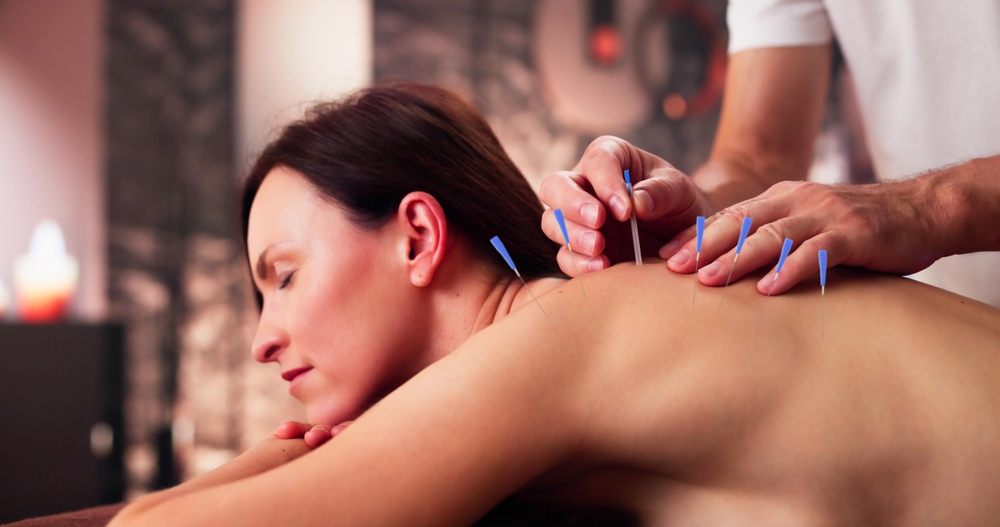
Treatment uses fine, sterile, single-use needles at selected points. For anxiety presentations, these are typically on the wrists, lower arms, and lower legs, with occasional points on the chest, upper back, or scalp depending on the pattern. Needles are retained for 20 to 30 minutes. The sensation at the needle site (heaviness, tingling, or warmth) is called De Qi in TCM. Most patients describe deep relaxation by the end of the first session.
Where the pattern calls for it, Practitioner Liu may recommend Chinese herbal medicine alongside acupuncture. For Kidney deficiency presentations, herbs address what needles alone cannot sustain between sessions. All prescriptions are personalised formulations, not supplements.
How Many Sessions, and How Quickly
For mild-to-moderate anxiety with a clear pattern, most patients notice measurable change in sleep quality and physical tension within three to five sessions. A typical initial course is six to eight weekly sessions, reviewed at each visit as the pattern shifts.
Presentations involving Kidney deficiency, or anxiety that has been present for several years, take longer. Situationally driven anxiety (a clear trigger, recent onset) often responds faster. If nothing has shifted after several sessions, the approach gets reassessed.
Patients who respond fastest tend to share one characteristic: they also make one or two lifestyle adjustments alongside treatment. For Liver Qi stagnation, that usually means reducing alcohol and eating at consistent times. Neither is dramatic. Both matter more than most patients expect.
Alongside Conventional Treatment
There are no known interactions between acupuncture and standard anxiolytic or antidepressant medications. Continue any prescribed medication exactly as directed. Do not reduce or stop it based on improvements during treatment without speaking to your GP first.
If you are in therapy, acupuncture does not interrupt that process. Patients who are in both often describe the combination as productive: physical sessions reduce baseline activation, which appears to make cognitive work in therapy more accessible.
Practitioner Liu may also discuss TCM nutritional principles where relevant to your pattern. This is not a dietary overhaul. It is pattern-specific guidance, for example around foods that aggravate Liver Qi stagnation, that patients can apply or not at their own discretion.
Who This Clinic Serves
Liu’s clinic in Belgravia draws patients from across central London: Victoria, Pimlico, Chelsea, Westminster, Battersea, and beyond. The clinic is within walking distance of Victoria station.
Practitioner Liu trained in medicine at Capital Medical University in China, obtained official medical practice qualifications, and then completed postgraduate studies at the UK College of Traditional Chinese Medicine, earning a Master’s diploma. The clinic treats anxiety and stress regularly, alongside women’s health, pain, and digestive conditions.
The clinic is listed with several private insurance providers. Check directly whether your policy covers TCM treatment, as coverage varies.
What Patients Have Said
“She listens to my concern and follows up my conditions… I’ve seen improvements not only in my back but also in my headache, ear ringing, neck and shoulder pain, joint discomfort, anxiety, painful period and sleep quality.”
Xuan Zhang Verified Google review
“I’ve been seeing Dr. Liu for a little while now and I’m already starting to notice positive changes. She’s knowledgeable, kind and really takes time to listen. I feel like I’m in good hands.”
Zuzanna Verified Google review
“Dr. Liu is very patient, knowledgeable, and caring… she also helped relieve my migraines, insomnia, joint pain, stress and other issues.”
Erika Wilde Verified Google review
Frequently Asked Questions
Does acupuncture help anxiety immediately, or does it take time?
Most patients feel noticeably calmer after the first session. That effect is partly the relaxation response during treatment. Durable change in the underlying pattern takes longer: three to five sessions for early shifts in sleep and physical tension, six to eight for a more sustained improvement.
How often should I get acupuncture for anxiety?
Weekly for the initial course, typically six to eight sessions. Once the pattern has shifted, frequency reduces. Some patients maintain monthly sessions; others discharge after the initial course and return if symptoms recur.
Can acupuncture help panic attacks?
Yes, particularly by reducing the background sympathetic activation that makes panic more likely. Acupuncture is not an intervention for an acute panic attack itself. If panic attacks are frequent or severe, see your GP for a full assessment alongside any complementary treatment.
Are there side effects from acupuncture for anxiety?
Acupuncture is well-tolerated. The most commonly reported effects are mild soreness at needle sites, light-headedness immediately after treatment (especially in the first session), and occasionally a temporary worsening of symptoms as the pattern shifts. These are transient. Serious adverse events are rare when treatment is performed by a qualified practitioner using sterile single-use needles.
Can I have acupuncture alongside my anxiety medication or antidepressants?
Yes. No known interactions exist between acupuncture and standard anxiolytic or antidepressant medications. Inform your GP that you are attending. Do not adjust medication based on improvements you notice during treatment without medical guidance.
What does a TCM assessment find that a GP consultation does not?
Pulse quality at multiple positions, tongue appearance, sleep disruption patterns, temperature regulation, the physical location of tension, and digestive response to stress. These allow the practitioner to identify which organ system pattern is driving the presentation, information that does not appear in a standard GP history but shapes the entire treatment approach.
Does acupuncture work for stress without a diagnosed anxiety disorder?
Yes. Many patients present without a formal diagnosis: sustained overwork, burnout, or a stress load that has crossed into something persistent. TCM does not require a diagnostic label. The pattern-based approach works regardless.
What is the best acupuncture clinic for anxiety in London?
That depends on what you need from treatment. For pattern-specific TCM diagnosis (pulse, tongue, full case history) combined with a practitioner trained in both Chinese and biomedical approaches, Liu’s clinic in Belgravia is worth considering. The clinic is accessible from Victoria, Chelsea, and Pimlico.
Book an Anxiety Acupuncture Assessment
Anxiety that has been present for more than a few weeks rarely resolves without intervention. The patterns that maintain it (Liver Qi stagnation, Heart Blood deficiency, Kidney Yin deficiency) do not self-correct.
A first appointment is one session. It either confirms acupuncture fits your pattern, or it tells you it does not. Either is a useful outcome.
Liu’s Chinese Medicine Clinic 9 Eccleston St, London SW1W 9LX (near Victoria station) Monday to Friday, 9:30 AM to 1:30 PM Phone: +44 7367 715922
Book an appointment online | Chat on WhatsApp
New patients receive £20 off their first visit with a gift voucher.
For a full overview of services, see the acupuncture and herbal medicine pages. Read about the clinic and Practitioner Liu’s background before booking if that helps you decide.
Last Updated: April 2026. Website content is educational only and does not constitute medical advice. Outcomes vary between patients. Continue any prescribed treatments as directed by your GP or prescriber.