Liu’s Chinese Medicine Clinic treats knee and joint pain with acupuncture at the Light Centre in Belgravia, minutes from Victoria, and in most cases you are assessed and treated in the same first appointment. Acupuncture will not regrow worn cartilage, but for the pain, stiffness, and muscle weakness that come with an arthritic or overused knee, it can offer real relief without jumping straight to injections or surgery. Sessions are £100 for sixty minutes, with £20 off your first visit.
Does acupuncture help knee pain? For osteoarthritis, wear, and overuse, it can ease the pain and the surrounding muscle tension, helping you stay mobile. It does not reverse joint damage, and a hot, swollen, or locked knee should be seen by a doctor first.
Common causes: osteoarthritis, wear, injury, and inflammation
Most knee pain in older adults is osteoarthritis: the gradual wear of the cartilage that cushions the joint, worse with use and better with rest. Younger, active knees more often hurt from a specific load, the runner’s knee that comes from pounding the pavements and the Royal Parks, or a weekend flare-up from sport like tennis or padel. A separate and important category is inflammatory arthritis, such as rheumatoid arthritis, where the immune system attacks the joints. That is a systemic medical condition, not simple wear, it needs a doctor and often a rheumatologist, and acupuncture is only ever a support for pain alongside that care.
It is not always the knee: the hip and ankle matter
One thing a thorough assessment catches that a quick one misses: knee pain is often driven from above or below. A tilted pelvis, tight hip flexors, or a stiff ankle change how the knee loads with every step, and needling only the knee then disappoints. Practitioner Liu assesses the hip and ankle as well as the knee, because treating the knee in isolation when the problem is further up the leg is a common reason acupuncture “did not work” elsewhere. Where the chain runs into the lower back, our guide to lower back pain is the related read.
How acupuncture relieves knee and joint pain
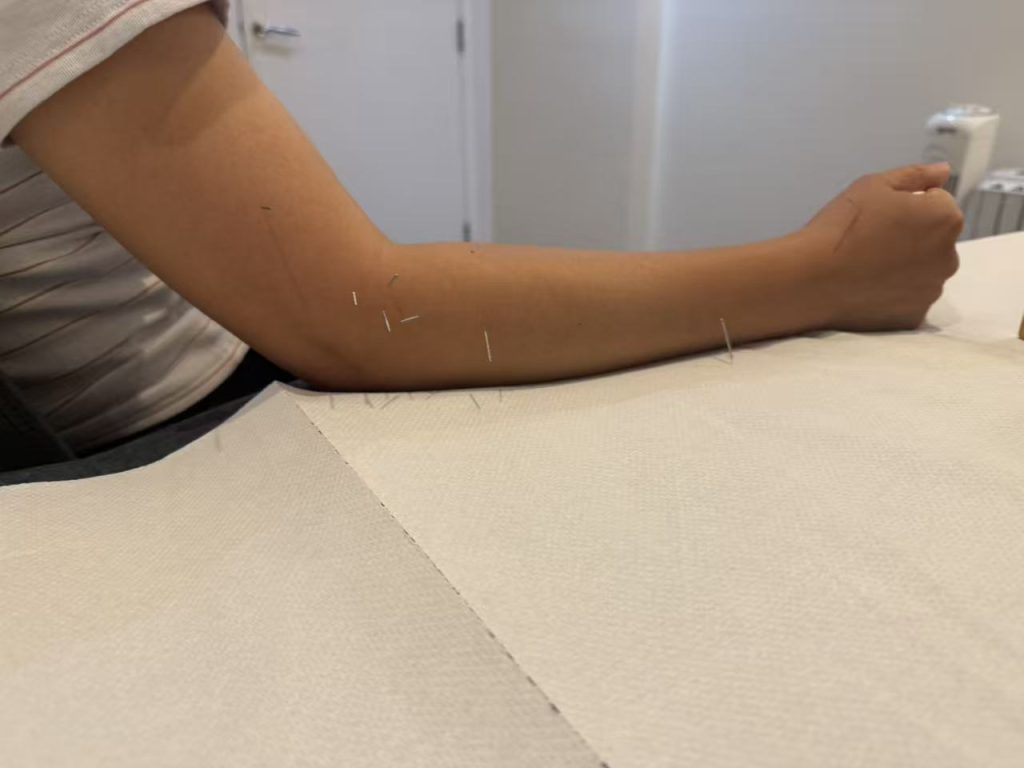
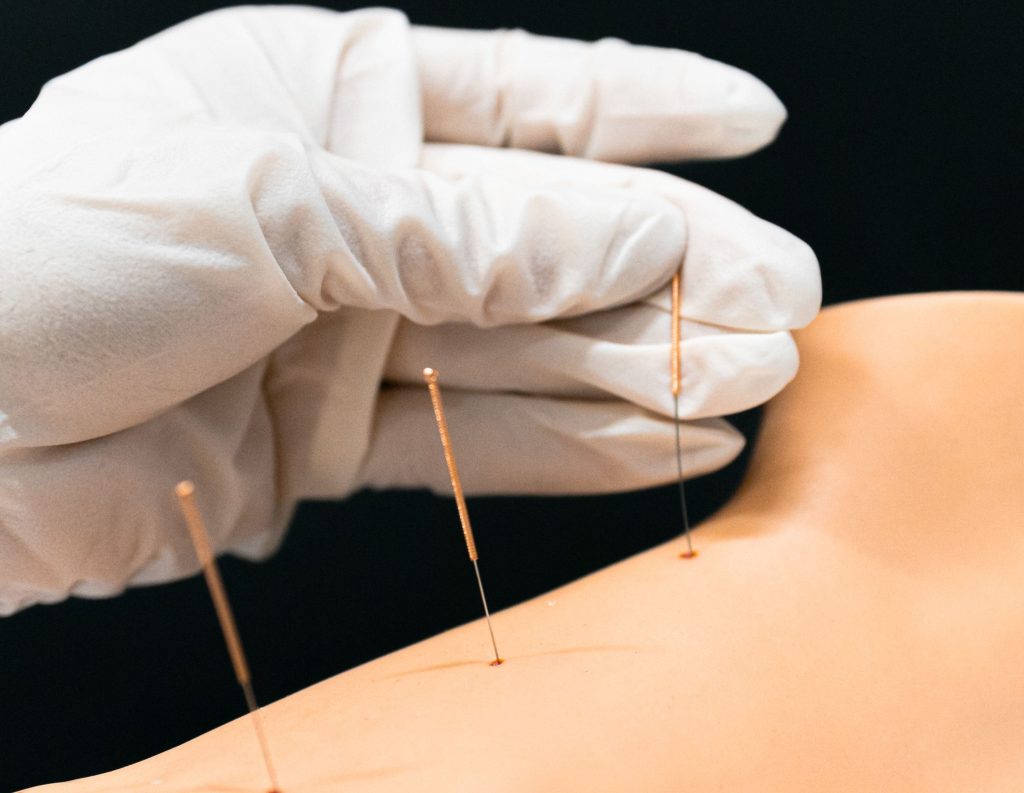
Needles around the knee and into the supporting muscles of the thigh ease pain, prompt the release of the body’s own painkilling chemicals, reduce the muscle tension that builds up to protect a sore joint, and calm the pain signal. Stronger, less guarded muscles around the knee mean better support and easier movement, which is a real part of how it helps day to day. To be clear about the bit people worry about most: the needles go into the tissue around the joint, not into the joint space itself, so this is not an injection into an already painful, bone-on-bone knee.
Acupuncture for arthritis specifically
For osteoarthritis of the knee, acupuncture is used to manage pain and keep you moving, not to cure the arthritis. The evidence here is genuinely mixed, and we will give you the honest version: large pooled analyses of chronic pain that include knee osteoarthritis show a modest benefit, while UK guideline bodies remain cautious about recommending it specifically for osteoarthritis. A drug-light way to manage the pain still has real value even when it is not a cure, which is exactly why people who would rather not lean on anti-inflammatories choose it. along with herbal medicine which also provides valuable support in managing symptoms,
Acupuncture points and what to expect
The points follow your particular knee. Commonly used ones include Dubi (ST35) and the “eyes of the knee” either side of the kneecap, Zusanli (ST36) below the knee, and points on the thigh that support the joint. The sensation is a dull ache rather than a sharp jab, and needles are sterile and single-use.
Sessions, timeline, and ongoing management
Most people need a short course of four to six sessions, with many easing within the first two or three. Because osteoarthritis is a long-term condition, many people then space sessions out for occasional maintenance rather than expecting a one-off cure. We are honest about that from the start, so you know what you are signing up for.
When to see a doctor first
A hot, red, swollen knee, a knee that locks or gives way, or sudden severe pain after an injury should be assessed medically first. Practitioner Liu, who qualified as a doctor in China before training in Traditional Chinese Medicine, screens for these and for the signs of inflammatory arthritis that need a GP or a rheumatologist, rather than treating around them.
Book joint pain treatment in Central London
We are at the Light Centre, 9 Eccleston Street, London SW1W 9LX, near Victoria. If getting around on a painful knee is part of the problem, message us before you book and we will talk you through the easiest way in. Here is what happens next:
- Book an appointment online through our booking page, or message us on WhatsApp first if you have a question.
- Come in for a consultation and a full assessment of the knee, hip, and ankle, with treatment usually included in the same visit.
- Work through a short course, typically four to six sessions.
- Review your progress with Practitioner Liu and move to occasional maintenance if it suits a long-term joint.
For the wider picture, see our hub for acupuncture for pain relief or read more about our acupuncture service.
Frequently asked questions
Does acupuncture help knee pain?
For osteoarthritis, wear, and overuse, it can ease the pain and the muscle tension around the joint so you stay mobile. It does not reverse the underlying damage.
Can acupuncture help arthritis in the knee?
For osteoarthritis, it is used to manage pain rather than cure it. For inflammatory arthritis like rheumatoid, it is only ever a support alongside proper medical care from a GP or rheumatologist.
How many sessions for knee pain?
Usually a short course of four to six, with many people easing within the first two or three, and optional maintenance after that for a long-term joint.
Does it work for osteoarthritis?
The evidence is mixed. Large analyses including knee osteoarthritis show a modest benefit, while UK guideline bodies stay cautious. As a drug-light way to manage pain, many people still find it worthwhile.
What is the typical cost for acupuncture sessions targeting knee pain?
Liu’s Chinese Medicine Clinic charges £100 for a 60-minute acupuncture session for knee and joint pain, with £20 off a first visit. Most people need 4 to 6 sessions before easing, since acupuncture manages arthritic and overused knee pain rather than reversing joint damage.
Can I get acupuncture for knee pain through the NHS?
NHS acupuncture access for knee pain depends on the local integrated care board and is not offered everywhere. Many patients choose private acupuncture instead for faster access, typically a same-day assessment and first treatment rather than a referral wait.
What qualifications should I look for in an acupuncturist treating knee pain?
Look for membership of the British Acupuncture Council (BAcC), the UK’s main professional body, which requires defined training standards, a code of safe practice, and ongoing development. A qualified acupuncturist should also screen for red flag symptoms needing a GP or rheumatologist first.