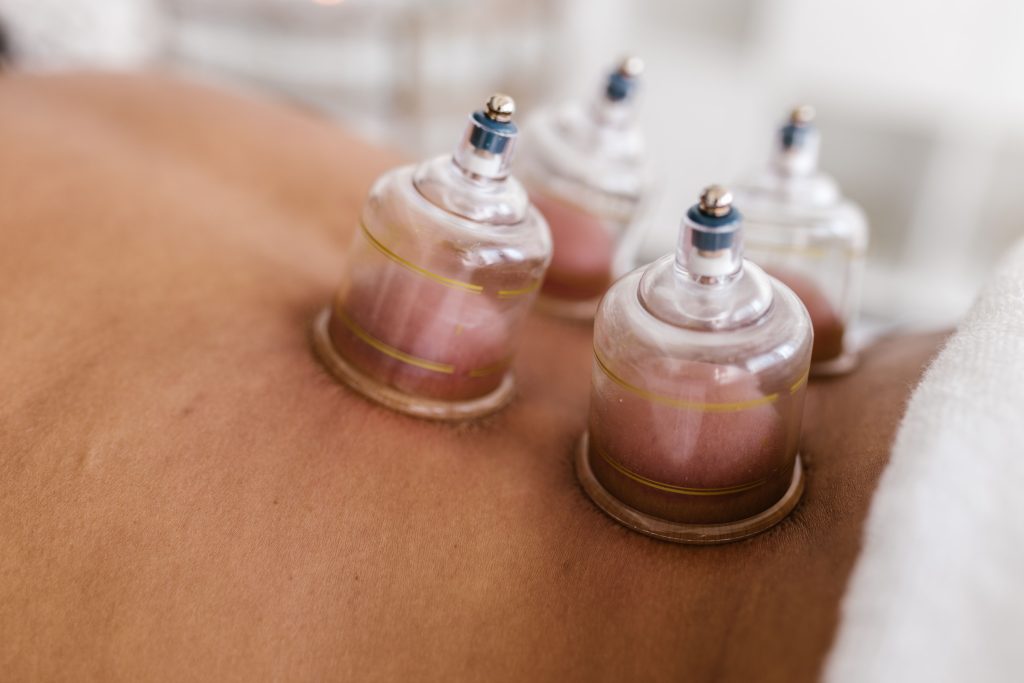
If your back pain is the muscular kind, tight, knotted, and ropey, cupping is one of the faster ways to get it to release. It suits the broad, stubborn sheets of back and shoulder tension that build up from fifty-hour weeks at a desk or from heavy gym work, the kind a thumb never quite reaches. At our Belgravia clinic, minutes from Victoria, we most often use cupping alongside acupuncture rather than on its own, as part of a treatment plan led by Practitioner Liu, who trained as a doctor in China before training in Traditional Chinese Medicine.
Does cupping help back pain? For tight, knotted muscular tension, yes. It decompresses the muscle and fascia and draws fresh blood to the area, easing the tension that keeps a back locked. It is not a treatment for disc or nerve problems.
How cupping relieves muscular tension and back pain
Cups create gentle suction that lifts the skin and the tissue beneath. Think of it as the reverse of a massage that presses down: instead of compressing the muscle, it decompresses it, lifting tight muscle and fascia, drawing fresh blood to the area, and easing the tension that holds a back rigid. For broad, stubborn areas of muscular back and shoulder tension, that lift frees what direct pressure cannot. It works on muscular and fascial tension, and it is not a treatment for disc or nerve problems.
Cupping with acupuncture for stubborn back pain
We usually combine the two. Needles calm the pain signal and release specific points, while cupping decompresses the larger muscle sheets around them, and for a tight lower back that pairing often does more than either alone. If your pain is more nerve than muscle, with shooting pain or numbness down the leg, our guide to acupuncture for lower back pain is the better starting point.
Is cupping painful, and what do the marks mean?
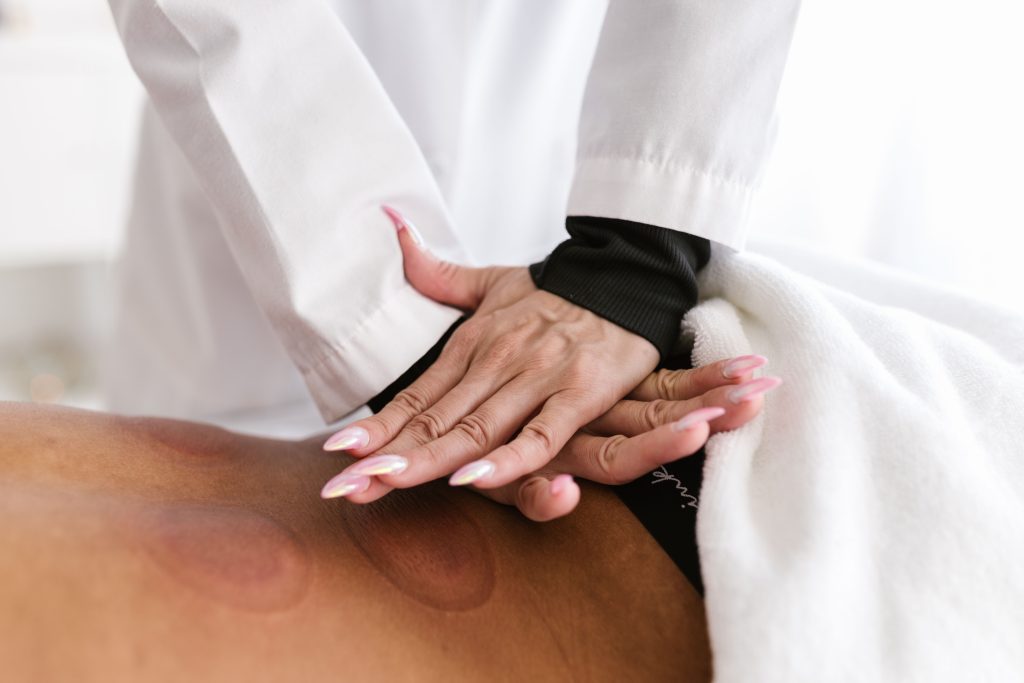
Cupping is not painful for most people. It feels like a firm pulling or tightening, not a pinch or a scratch. The round marks it leaves look dramatic, but they are not bruises from impact: they are simply a harmless physiological effect of the suction drawing a little blood to the surface. They are usually painless to the touch and fade on their own, typically within three to ten days. Cupping is carried out under medical supervision here, and it is avoided over broken skin and in a few specific conditions, which we check before we start.
Frequently asked questions
Does cupping help back pain?
For muscular, tension-driven back pain, yes. It decompresses tight muscle and fascia and improves blood flow. It does not treat disc or nerve problems.
Is cupping painful?
Not for most people. It feels like a firm pull or tightening rather than a sharp sensation
Can you combine cupping with acupuncture?
Yes, and we usually do. The two work well together for stubborn muscular back pain.
What do the marks mean, and how long do they last?
They are blood drawn to the surface by the suction, not impact bruises, and they fade on their own, typically within three to ten days.
To book, choose an appointment through our booking page or message us on WhatsApp to ask whether cupping, acupuncture, or both suits your back, and new patients receive £20 off the first visit. For the wider picture, see our hub for acupuncture for pain relief.