Traditional Chinese Medicine in London
Most people who walk into a TCM clinic in London have already tried something else. Physiotherapy. GP appointments. Pain management referrals. They are not new to healthcare. What they have not tried is a system that reads the body differently from the ground up. For more information about traditional Chinese medicine services in London, please visit our homepage.
That difference is not a sales pitch. It is a structural distinction built into how TCM diagnoses and treats, and it either matters to you or it does not.
Why Liu’s Chinese Medicine Clinic, and Not Another London Practice
London has more acupuncture practitioners than ever. Most patients have no reliable way to tell them apart. Here is what actually distinguishes Liu’s:
| What to Compare | Liu's Chinese Medicine Clinic | Typical London Acupuncture Provider |
|---|---|---|
| Training depth | Medical degree (Capital Medical University, Beijing) + Master's diploma (UK College of TCM) | Often a 2–3 year diploma or CPD add-on to an existing therapy practice |
| Diagnostic method | Full classical TCM: tongue, pulse, and structured intake before any treatment | Frequently symptom-focused, with minimal or no formal TCM diagnosis |
| Treatment scope | Acupuncture, herbal medicine, cupping, cosmetic acupuncture, combined where indicated | Acupuncture only in most cases |
| Women's health specialism | Primary focus: PCOS, fertility, IVF support, menopause, and endometriosis | Generalist, with women's health as one of many offerings |
| Medical frame of reference | Dual-trained: reads blood results alongside tongue and pulse | TCM only, or Western only |
| Location | 9 Eccleston Street, Belgravia, London SW1W 9LX | Variable |
The gap that matters most is diagnostic depth. A practitioner who reads your tongue, takes your pulse at multiple positions, and cross-references that with your full medical history will produce a different treatment plan from one who asks where it hurts and selects points from a protocol.
Who This Is Relevant For
Book a consultation at Liu’s if any of the following applies:
- You have been told your test results are normal, but you still feel unwell
- You are managing PCOS, endometriosis, or irregular cycles and Western treatment has not resolved the root cause
- You are preparing for IVF or fertility treatment and want to support your body beforehand
- You have chronic digestive complaints, skin flare-ups, or recurring respiratory symptoms with no clear diagnosis
- You want a structured, non-pharmaceutical approach to menopause, anxiety, or low energy
- You have had acupuncture elsewhere without full TCM diagnosis and want to understand whether a different approach would produce different results
What Most People Get Wrong About Traditional Chinese Medicine
The most common mistake is treating TCM as a backup plan. People try it after everything else has failed, often in a depleted state, and then wonder why progress is slow. TCM works best as a system, not a rescue. The earlier you engage with it, the more it has to work with.
The second mistake is assuming acupuncture and TCM are the same thing. Acupuncture is one tool within TCM, and the most recognisable one because it translates most easily into a Western clinical frame. But TCM also includes Chinese herbal medicine, cupping therapy, dietary therapy, and lifestyle guidance, all prescribed on the basis of an individual diagnosis. At Liu’s, acupuncture and herbal medicine are often used together because the diagnosis frequently points to both.
The third mistake is choosing a practitioner based on proximity or price without checking their training background. That gap shows up in the consultation room, not in the marketing.
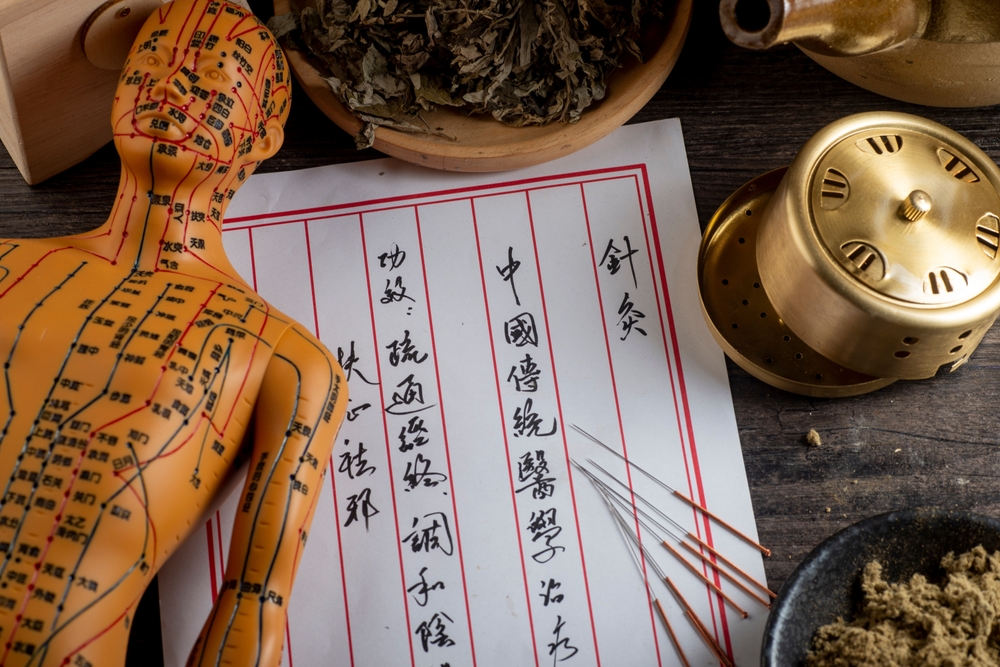
What Is Traditional Chinese Medicine and How Does It Differ from Western Medicine?
Traditional Chinese medicine is a coherent medical system developed over more than 2,000 years. It diagnoses and treats illness by mapping patterns of functional imbalance within the body, rather than isolating a single pathology or organ. The goal is to identify what has disrupted the body’s equilibrium and correct it through targeted intervention.
Western medicine excels at identifying structural problems: a torn ligament, a bacterial infection, a tumour. It works from the organ outward, with diagnostics built around blood chemistry, imaging, and measurable biomarkers. TCM works from the pattern inward.
A TCM practitioner asks: what is the body telling us through its overall presentation? The tongue coating, the quality of the pulse, the nature of the pain, the time of day symptoms worsen, the patient’s thermal preferences, the state of their sleep. All of these are data.
Western medical acupuncture, as practised by some GPs and physiotherapists, is essentially dry needling with an anatomical rationale. It has its uses. But it does not begin with tongue diagnosis, pulse reading, or pattern differentiation. It is a technique extracted from a system, not the system itself.
| TCM Approach | Western Medical Acupuncture |
|---|---|
| Full diagnostic consultation: tongue, pulse, and structured intake | Focused on the presenting symptom |
| Treats pattern of imbalance across the whole body | Targets a specific anatomical structure |
| May combine acupuncture with herbs, cupping, and dietary advice | Acupuncture only, usually |
| Classical training: minimum 3–4 years | Often a short CPD course for existing clinicians |
| Designed to address root cause | Primarily symptom management |
The Four Pillars of TCM Diagnosis
TCM diagnosis rests on four methods used together: observation (Wang), listening and smelling (Wen), questioning (Wen, a different character), and palpation (Qie). Together these are called the Four Examinations.
Observation covers the tongue, the complexion, and any visible physical signs. A pale tongue coating suggests cold and deficiency. A red tongue body with a yellow coat points to heat and often inflammation. Cracking down the centre can indicate stomach Yin deficiency. None of these readings is made in isolation, but each one narrows the diagnostic picture significantly.
Questioning covers symptoms in detail: location, quality, timing, what makes it better or worse, digestion, sleep, menstruation, emotional patterns, and thirst. A practitioner trained in classical TCM asks questions a GP would not, because the answers mean different things within this diagnostic framework.
Palpation means feeling the pulse at three positions on each wrist, each position corresponding to a different organ system. A competent TCM practitioner reads the pulse for depth, rate, strength, and shape: floating or sinking, slippery or wiry, full or thin. That reading is not intuitive. It takes years to develop the clinical sensitivity, which is one reason training depth matters.
How Tongue and Pulse Diagnosis Work at Liu’s Clinic
At Liu’s clinic, the first consultation begins with these diagnostic methods before any treatment discussion takes place.
In practice, this is what happens:
Practitioner Liu will observe your tongue, including its colour, coating, shape, and moisture. She will take your pulse on both wrists, reading multiple positions. She will ask a structured series of questions covering your presenting complaint, related body systems, sleep, digestion, menstrual cycle if relevant, emotional state, and thermal comfort. She will also review any Western medical history, including blood tests or imaging results, as part of the integrative picture.
This process typically takes 30-45 minutes for an initial appointment. The result is a TCM diagnosis, which may describe something like Liver Qi stagnation with Blood deficiency, or Kidney Yang deficiency with Spleen dampness. These terms describe functional patterns, not anatomical lesions. The treatment plan follows directly from the pattern.
For most patients, this is the first time someone has looked at their health as a connected whole rather than a list of separate symptoms.
What Conditions Does TCM Treat? The Scope of Practice at Liu’s
At Liu’s clinic, the strongest results are seen in conditions where Western medicine offers management but not resolution, or where test results come back normal despite the patient feeling genuinely unwell.
- Women’s health is the primary specialism: PCOS, irregular or painful periods, endometriosis, ovarian cysts, perimenopause, menopause, IVF support, postnatal recovery, and fertility preparation. TCM has a long clinical history with hormonal patterns, and the diagnostic model maps hormonal cycles directly onto organ system function in ways that produce genuinely targeted treatment. If you are managing a hormonal condition and want to understand whether TCM is the right addition to your current approach, book an assessment at Liu’s clinic.
- Digestive complaints including chronic bloating, constipation, acid reflux, and IBS-type presentations respond well when the underlying pattern is correctly identified. A Western diagnosis of IBS covers a broad range of patterns in TCM. Cold-damp patterns in the Spleen require different treatment from Liver overacting on Stomach. The differentiation produces better results.
- Skin conditions including acne, eczema, hives, and chronic urticaria are treated through Chinese herbal medicine and acupuncture together. Skin conditions in TCM are typically expressions of internal heat, damp-heat, or Blood deficiency, and treating the internal pattern is more durable than managing the skin in isolation.
- Musculoskeletal pain, including neck, shoulder, lower back, and knee complaints, responds well to acupuncture when the pain has a clear channel distribution. Liu’s treats these alongside the constitutional picture, which is relevant when pain keeps returning despite physical treatment.
- Emotional wellbeing: anxiety, low mood, poor sleep, and stress-related presentations often involve Heart, Liver, or Kidney patterns in TCM. Treatment through herbs and acupuncture does not replace psychological support, but it can shift the physical substrate that makes emotional regulation harder.
- Respiratory conditions including hay fever, allergic rhinitis, and chronic cough are conditions where TCM can reduce frequency and severity over time, particularly when Western antihistamines are providing only partial relief.
The Core Principles: Qi, Meridians, Yin and Yang
Traditional Chinese medicine operates on the principle that the body contains a vital energy called Qi (pronounced “chee”) that flows through pathways called meridians. When Qi flows freely and in the right balance, the body maintains health. When it stagnates, becomes deficient, or accumulates in the wrong place, symptoms arise.
Acupuncture works by inserting fine needles at specific points along these meridians to correct the flow. At Liu’s clinic, acupuncture is prescribed based on a full TCM diagnosis, not applied generically. Each session targets a pattern of imbalance specific to that patient, identified through tongue reading and pulse diagnosis.
Qi is not mystical in its clinical application. Within the TCM framework, it functions as a working model for how the body organises its energy, defends itself, and maintains circulation.
Yin and Yang underpins all of this. Every organ system has Yin and Yang aspects. Yin covers the structural, cooling, and nourishing functions. Yang covers the warming, moving, and transforming functions. A patient with Kidney Yin deficiency might present with night sweats, a dry mouth, and afternoon heat sensations. A patient with Kidney Yang deficiency might present with cold limbs, low back ache, and fatigue that worsens in winter. Both have a kidney pattern. The treatment is entirely different.
Act Now or Wait?
| Act Now If | Wait, or Seek Another Route If |
|---|---|
| You have a chronic condition that Western medicine manages but does not resolve | You have an acute infection or emergency needing immediate medical attention |
| You are preparing for IVF or fertility treatment within the next 3–6 months | You are expecting a single session to produce a lasting result |
| Your symptoms are recurring despite standard treatment | You are unwilling to commit to a course of treatment |
| You feel unwell but tests come back clear | Your GP has identified a condition requiring surgery or urgent intervention |
| You want a different diagnostic framework before symptoms worsen | You have not yet explored Western investigation and should not skip it |
Symptoms that have persisted for months do not self-correct. The patterns driving them, whether Liver Qi stagnation, Kidney deficiency, or Spleen dampness, require targeted intervention. A diagnostic consultation takes one session. It either confirms TCM is the right fit for your pattern, or it tells you it is not. Either outcome is useful.
TCM works best with time and consistency. Most patients treating chronic conditions see meaningful change over 4-8 weeks of regular treatment. Acute or more recent presentations often respond faster.
Frequently Asked Questions
What is traditional Chinese medicine and how does it work?
Traditional Chinese medicine diagnoses illness by identifying patterns of imbalance across the whole body, using tongue observation, pulse reading, and structured questioning. Treatment uses acupuncture, herbal medicine, cupping, and other tools to correct the identified pattern, not just manage the presenting symptom.
How is TCM diagnosis different from a standard Western consultation?
A Western consultation focuses on a specific complaint and may run blood tests or imaging. A TCM diagnostic consultation reads the tongue, takes the pulse at multiple positions on each wrist, and asks detailed questions about body systems that may seem unrelated to the main complaint. The result is a functional pattern diagnosis rather than a biomedical one.
What does tongue diagnosis show?
The tongue’s body colour, coating, shape, and moisture all carry diagnostic information. A red tongue body can indicate internal heat. A pale body suggests Blood or Yang deficiency. A thick white coating points to cold-damp accumulation. No single sign is read in isolation, but together they inform the TCM diagnosis considerably.
Is Liu’s clinic suitable if I have already had acupuncture elsewhere?
Yes. If previous acupuncture was administered without full TCM diagnosis, the experience at Liu’s will be different. Practitioner Liu conducts a full intake before treating, and the acupuncture points selected follow from that specific diagnosis. Many patients come to Liu’s after less structured experiences elsewhere.
What conditions does Liu’s clinic specialise in?
The clinic’s primary specialism is women’s health: PCOS, fertility support, IVF preparation, endometriosis, irregular periods, menopause, and postnatal recovery. Liu’s also treats digestive complaints, skin conditions, musculoskeletal pain, respiratory conditions, and emotional wellbeing concerns including anxiety and poor sleep.
How many sessions will I need?
This depends on the condition and how long it has been present. Acute conditions often respond in 4-6 sessions. Chronic conditions that have developed over months or years typically need 8-12 sessions or more, with herbal medicine running alongside. Practitioner Liu discusses realistic expectations at the first consultation.
Do I need a GP referral to book at Liu’s clinic?
No referral is needed. Liu’s clinic accepts self-referrals directly. Bringing existing medical records or test results to your first appointment helps Practitioner Liu build the most complete diagnostic picture.
Book a Diagnostic Consultation at Liu’s Chinese Medicine Clinic
Practitioner Liu holds a medical degree from Capital Medical University in Beijing and a Master’s diploma from the UK College of Traditional Chinese Medicine. She practices from the clinic at 9 Eccleston Street, Belgravia, London SW1W 9LX, and accepts new patients directly, without a GP referral. New patients can receive £20 off their first visit with a gift voucher.
Book a diagnostic consultation at Liu’s Chinese Medicine Clinic
You can also read about Practitioner Liu and the clinic or review the full range of acupuncture services available at Liu’s.