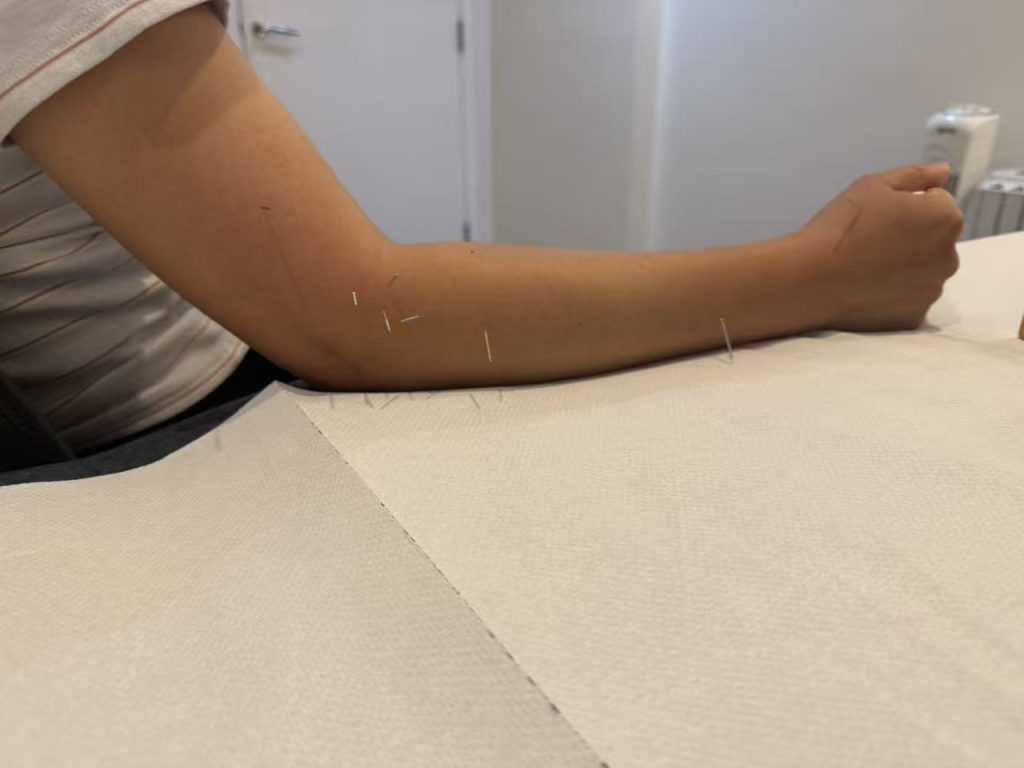
At my clinic inside the Light Centre in Belgravia, a five minute walk from Victoria station, I use acupuncture for tennis elbow to reduce pain and restore circulation to a tendon that has stopped healing properly. It is used alongside progressive loading and a change to the grip that caused the problem, not instead of them. I plan a course of 4 to 6 weekly sessions and review honestly at that point. The approach suits cases that have already persisted beyond a few weeks, which is almost every case I see.
Book a tennis elbow assessment
Almost nobody who walks into a London clinic with tennis elbow got it from tennis.
They got it from a mouse. From a laptop bag carried in the same hand every morning. From a kettlebell, a paint roller, a steering wheel, a pair of secateurs, or eighteen months of gripping a phone at an angle. The name is misleading in a way that actively delays treatment, because people wait for a sporting explanation that never arrives and conclude the pain must be something else.
Here is the more useful framing. Tennis elbow, clinically lateral epicondylitis or lateral elbow tendinopathy, is what happens when the wrist extensor tendons are loaded repeatedly without enough recovery and the tendon’s repair process stalls. In most cases the tissue involved is the tendon of the extensor carpi radialis brevis, which anchors at the outside of the elbow. The pain sits on the outside of the elbow and is sharpest when you grip, lift a cup, shake hands, or turn a door handle. The elbow itself is not so much the injury site as the anchor point taking the strain.
What Most People Get Wrong About Tennis Elbow
Common assumption | Clinical reality |
|---|---|
Complete rest will fix it | Current consensus favours progressive loading, isometric holds first and then controlled eccentric work. Complete rest lets tendon capacity fall further, so the pain returns as soon as normal activity resumes. |
It will clear up quickly | The NHS position is that tennis elbow usually improves on its own within 6 months to 2 years, with roughly 90 percent of people recovering fully within a year. That is reassuring and also why it gets ignored for months. |
The problem is at the elbow | The tendon anchors at the elbow, but the muscles pulling on it run the length of the forearm and are influenced by the wrist, the shoulder, and posture at a desk. |
A strap and painkillers count as treatment | A brace redistributes load so you can keep working, and it does not change the state of the tendon. Anti-inflammatory medication is a reasonable short-term measure for a condition that is only partly inflammatory. |
“Modify your grip” is enough advice | It is not advice until it is specific. Thicker tool handles, a neutral rather than extended wrist, a lower and closer mouse, and breaking up sustained grip are the changes that actually reduce load. |
Two years is a very long time to be unable to carry a shopping bag. The cases that reach my clinic are almost always the ones where several months of avoidance changed nothing, and by that point the tendon has usually shifted from an inflammatory state to a degenerative one. That shift is the reason anti-inflammatories underperform in chronic cases, and it is why chronic and recent cases should not be treated identically.
How Chinese Medicine Reads Lateral Elbow Pain
In Traditional Chinese Medicine this presentation falls under Bi syndrome, which simply means pain and restricted movement caused by obstruction in the channels. In plain terms, something is blocking normal circulation through the area, and the Large Intestine channel runs directly through the point most people press when they show you where it hurts.
Three factors are typically involved.
Local Qi and blood stagnation. Repetitive loading without recovery slows local circulation. Tendon tissue has a poor blood supply at the best of times, which is a large part of why tendinopathy heals so slowly. Stagnation presents as a fixed, sharp, well-localised pain that is worse with pressure.
Cold or damp in the channel. Pain that is markedly worse in cold or wet weather, better with heat, and accompanied by a heavy or stiff quality points here. It is common in London offices where forearms rest for hours on a cold desk surface near air conditioning.
Underlying deficiency. In cases that have persisted for a year or more, or that recur every few months, there is usually a deficiency component. The channel is not simply blocked. There is not enough Qi and blood reaching the area to complete the repair, and treatment has to build supply rather than only clear obstruction.
What Treatment Involves
Needling is not confined to the elbow. I combine local points around the lateral epicondyle with points along the forearm and, where relevant, the shoulder and neck, because the tension pulling on the tendon frequently originates further up the chain.
Cupping and moxibustion are often used alongside acupuncture for this condition. Cupping addresses forearm tissue tension across a broader area than needling alone. Moxibustion is used where cold is a clear factor, and its practical value is that patients recognise the change quickly.
Treatment is only half of it. The load that created the problem has to change, or the tendon keeps being re-injured between sessions. In practice that means identifying the one specific repeated grip driving it, which is usually a single action rather than a general activity level.
Book a tennis elbow assessment
How Long Does Tennis Elbow Last, and How Many Sessions Will You Need?
This is the question people most want answered and most rarely see addressed directly, so here is a straight answer for London clinic patients considering acupuncture for tennis elbow.
Recent cases, meaning pain present for a few weeks to a couple of months, tend to respond faster. Chronic cases, where the pain has persisted for six months or more, take longer, because there is genuine tissue change to reverse rather than inflammation to settle.
A reasonable working plan is a course of 4 to 6 sessions, usually weekly, with an honest review at that point. Some improvement should be evident by then, either in pain level, in grip strength, or in how long relief lasts between sessions. If nothing has shifted after six sessions, the correct response is to reconsider the approach rather than to book another six. Sessions are spaced weekly at first and extended as symptoms settle.
Consultations run 15 to 30 minutes, and all appointments are by prior arrangement only. Current session pricing is shown on the booking page. The clinic also works with insurance companies towards treatment costs, although the final determination of coverage is always made by your own provider.
Bring a list of anything you currently take, prescription or supplement, and if you can, a note of the specific movement that provokes the pain most reliably. The consultation opens with case history, and that one detail usually identifies the load that has to change.
Getting Here From a Working Day
The clinic runs Monday to Friday, 9:30 AM to 1:30 PM, with the last appointment at 1:30 PM. The Light Centre is a five minute walk from Victoria station and roughly fifteen minutes on foot from Sloane Square, so for anyone working in Victoria, Belgravia, or Pimlico an appointment is reachable before work or across a long lunch rather than requiring a day of annual leave.
When to See Your GP or a Physiotherapist
Seek medical assessment if you have any of the following:
- Elbow pain following a specific fall, impact, or sudden forceful movement
- Numbness, pins and needles, or weakness in the hand or fingers
- Visible swelling, redness, or heat over the joint
- Pain that wakes you at night and is unrelated to position
- Loss of movement at the elbow rather than pain on movement
- No improvement at all after several months of appropriate conservative care
Tennis elbow is a clinical diagnosis, and several other conditions produce lateral elbow pain, including radial nerve entrapment and pain referred from the neck. Getting the diagnosis right first matters more than starting treatment quickly.
Frequently Asked Questions
Will Acupuncture Cure Tennis Elbow?
Acupuncture is used to reduce pain and improve local circulation to a tendon that has stopped healing efficiently. It is not a guaranteed cure, and outcomes depend heavily on how long the problem has been present and whether the aggravating load is changed. Most tennis elbow resolves eventually with or without treatment. The reason people seek treatment is to shorten a recovery that otherwise commonly takes 6 months to 2 years.
How Many Acupuncture Sessions Are Needed for Tennis Elbow?
A course of 4 to 6 weekly sessions is a reasonable starting plan, with a genuine review at that point. Recent cases often need fewer. Cases that have persisted beyond six months usually need more, and progress is measured by grip strength and by how long relief lasts between sessions rather than by pain on the day of treatment.
What Is the Fastest Way to Cure Tennis Elbow?
No single intervention reliably makes it fast. The fastest realistic route combines three things: removing or modifying the specific repeated grip that caused it, progressive loading of the tendon rather than complete rest, and treatment to address local circulation and pain. Complete rest without load modification tends to produce relief that disappears the moment normal activity resumes.
What Vitamin Deficiency Causes Tennis Elbow?
Tennis elbow is a mechanical overload injury, not a nutritional deficiency, and no vitamin deficiency causes it. Nutrition supports tendon repair in general terms, so it is worth eating well and discussing any suspected deficiency with your GP, but correcting a vitamin level will not resolve an overloaded tendon on its own.
Is It Still Tennis Elbow if the Pain Is on the Inside of My Elbow?
No. Pain on the inner side of the elbow is golfer’s elbow, medial epicondylitis, which involves the wrist flexor tendons rather than the extensors. The underlying mechanism is similar, but the aggravating movements and the treatment points differ, so the distinction is worth confirming before starting any course of treatment.
Can I Keep Working While Having Treatment?
In most cases yes, and continuing to work is usually preferable to complete rest. What matters is modifying the specific action that provokes the pain: lowering and moving the mouse closer, keeping the wrist neutral rather than extended, using thicker handles on tools, and breaking up any grip you hold for long stretches.
What Happens Next
- Book an appointment through the online booking page, selecting an acupuncture session.
- Attend the initial consultation, which includes assessment of the elbow, forearm, shoulder, and the specific movements that provoke your pain.
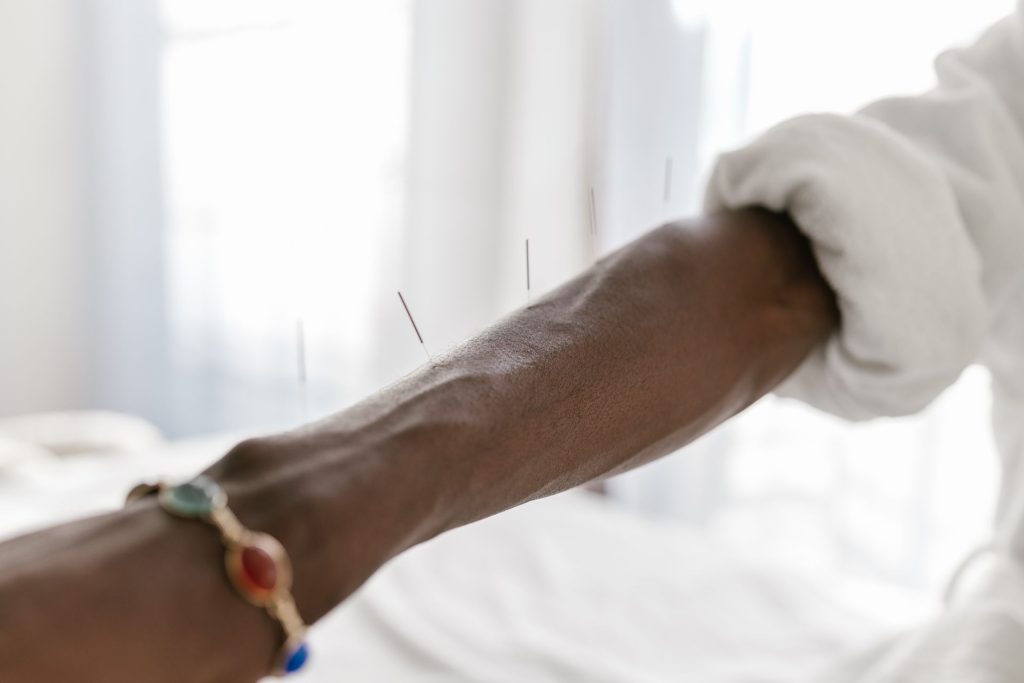
- Begin a course of treatment, typically weekly, combining acupuncture with cupping or moxibustion where appropriate, plus a clear plan for changing the load causing the problem.
- Review at 4 to 6 sessions, with an honest assessment of what has changed and whether to continue.
Liu’s Chinese Medicine Clinic is at 9 Eccleston St, London SW1W 9LX, inside the Light Centre in Belgravia. If you are not certain whether this is the right treatment for your elbow, you can message the clinic on WhatsApp before booking.
If your pain sits elsewhere, these may be more relevant: acupuncture for shoulder and frozen shoulder pain, acupuncture for knee and joint pain, acupuncture for neck pain, and cupping for back and muscle pain.