Facial Acupuncture in London: What It Is and What to Expect
Facial acupuncture is not a beauty treatment with a TCM label attached. At Liu’s Chinese Medicine Clinic in Belgravia, it is a constitutional health intervention, meaning the practitioner identifies the internal TCM pattern driving how your skin looks and ages, then treats the whole person, not just the surface.
That distinction matters before you read anything else on this page.
If you want a fast, one-session result, this is the wrong treatment. If you want a clinically grounded approach that addresses the patterns beneath dull skin, early lines, puffiness, or stress-related aging, read on.
What Facial Acupuncture Is and How It Differs from Injectables
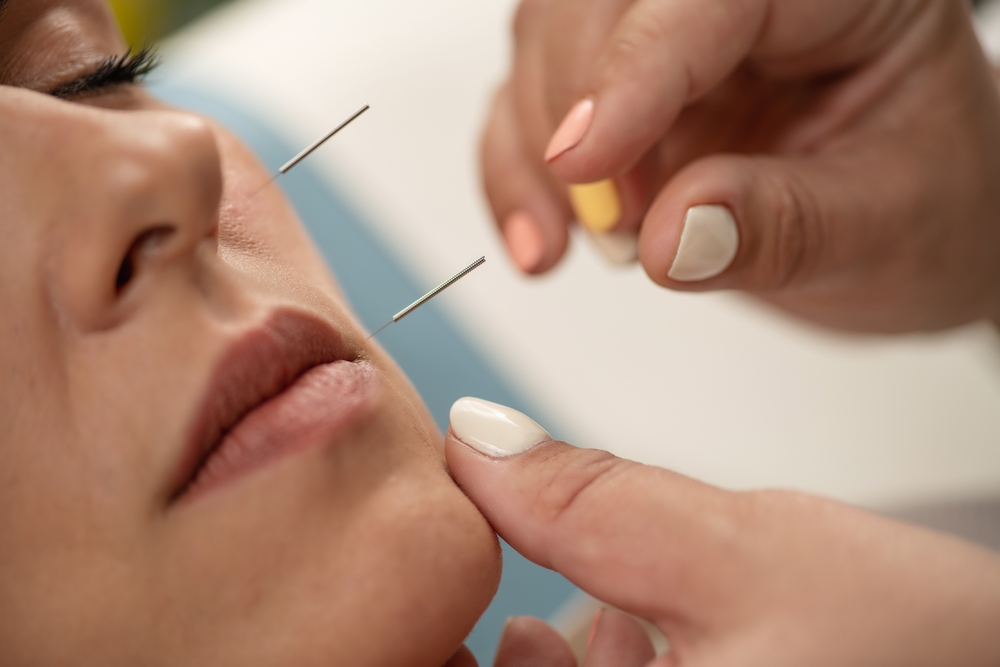
Facial acupuncture in London, also called constitutional cosmetic acupuncture or natural facelift acupuncture, uses fine sterile needles placed at specific points on the face and body to stimulate circulation, support tissue tone, and address the internal TCM patterns influencing skin health. It is not a cosmetic procedure in the clinical sense. No foreign substances are injected. Muscle movement is not paralyzed. There is no downtime.
Cosmetic injectables work through direct tissue modification: paralyzing muscle activity or adding synthetic volume. Facial acupuncture prompts your body’s own repair and regulatory processes instead. The mechanism, the pacing, and the type of change produced are all different.
The constitutional element is what separates this from a standard facial needle protocol. At Liu’s, the practitioner does not simply needle the face. A full TCM case history is taken, constitution is assessed, and patterns such as Blood deficiency, Qi stagnation, or Kidney Yin decline are identified. Body acupuncture points are selected alongside the facial work to address those patterns systemically. Two patients attending for the same skin concern may receive substantially different treatments because their constitutional patterns differ.
One important note for those who have recently had Botox or filler treatment: a gap of two to four weeks is required before beginning facial acupuncture. Mention this at consultation.
The Practitioner and Clinical Framework
Practitioner Liu holds a medical degree from Capital Medical University in China and a Master’s diploma from the UK College of Traditional Chinese Medicine. The same clinical reasoning she applies to pain management, hormonal health, and digestive disorders applies to every facial acupuncture case. There is no separation between the cosmetic and clinical sides of the practice.
The diagnostic model is grounded in TCM pattern differentiation. Dull complexion, poor skin tone, puffiness, and early lines are not treated as isolated surface problems. In TCM, they often reflect internal imbalances: poor Spleen function affecting nutrient absorption, chronic stress depleting Liver Blood, or long-term Kidney Yin deficiency showing up as dryness and loss of density.
A 2018 systematic review of prospective studies published in the Journal of Cosmetic Medicine (Shin and Lim, Pusan National University) assessed cosmetic acupuncture for skin rejuvenation and found it to be relatively safe with minimal downtime. The evidence base is developing rather than established at scale, and Practitioner Liu will be direct with you about what research currently supports and where clinical judgement fills the gap.
For full detail on Practitioner Liu’s background and training, visit the About Us page.
What Facial Acupuncture Does to Your Skin
Needling prompts a local response in the tissue. Fine needles create micro-stimulation at specific points, increasing local circulation and directing oxygen and nutrients to the area. The minor trauma from needling also encourages collagen and elastin production. Collagen keeps skin firm and plump; elastin maintains skin’s ability to return to shape. Over a course of sessions, both respond to consistent stimulation.
Facial muscle tone also changes. Acupuncture can relax tension in overworked facial muscles, which contributes to softening the appearance of lines driven by habitual expression rather than volume loss.
Body points selected for each patient vary by pattern. Points that support Spleen function govern nutrient transformation and connective tissue tone. Points that nourish Blood and Yin address dry or dull skin. Points that move Qi and Blood counter a lackluster complexion driven by stagnation.
Systemic improvements are expected alongside the facial changes. Patients managing sleep disruption, digestive irregularity, or chronic stress frequently report improvements in those areas as the constitutional pattern is addressed. This is not a side effect; it is the clinical aim.
Facial Acupuncture for Specific Skin Concerns
Fine Lines and Wrinkles
Collagen stimulation and muscle relaxation both contribute here. Lines driven by volume loss respond differently from lines driven by repetitive muscle tension, and the constitutional approach differentiates between them. Results build progressively across a course rather than appearing immediately after a single session.
Puffiness Around the Eyes and Jaw
Puffiness commonly relates to fluid retention, Spleen Qi deficiency, or poor lymphatic drainage. Body points targeting Spleen and Stomach function are typically included alongside facial work. Patients often notice changes in facial puffiness within the first few sessions.
Dull or Uneven Complexion
Poor circulation and Blood deficiency are common TCM drivers. Needling increases local blood flow to the face and, over a course, patients typically report a brighter, more even complexion.
Stress-Related and Perimenopause-Related Skin Changes
Chronic stress depletes Liver Blood and disrupts Qi flow, both of which show up in the skin. Perimenopausal and menopausal patients often present with Kidney Yin decline, which contributes to dryness, a loss of skin density, and accelerated visible aging. Constitutional acupuncture addresses these patterns directly rather than applying a standard protocol to symptoms. The clinic’s acupuncture page covers the broader range of conditions treated, including hormonal and stress-related presentations.
Jaw Tension
Tension held in the masseter and jaw muscles contributes to facial asymmetry and accelerated line formation around the lower face. Acupuncture to localized facial points can reduce that tension over a course of sessions.
Session Structure, Frequency, and Pricing
Each session at Liu’s runs for 90 minutes and includes facial acupuncture alongside Gua Sha and a herbal facial mask. A single session is priced at £180.
For those committing to an ongoing course, a monthly membership is available at £330 per month. This includes two sessions per month, saving £30 per month compared with single-session pricing, plus a 20% discount on herbal supplements and wellness products. The membership requires 30 days’ notice to cancel and can be paused once per year for up to three consecutive months.
Walk-in appointments are not accepted. Sessions are booked in advance via the clinic.
Recommended initial course by age:
- Under 40: 6 sessions, attended weekly
- 40–60: 6–8 sessions, attended weekly
- Over 60: 12 sessions, attended weekly
Maintenance frequency after the initial course:
- Under 40: every 4–6 weeks
- 40–60: every 2–3 weeks
- Over 60: every 2–3 weeks
Maintenance is not optional for sustained results. Muscle elasticity, fascia tone, and lifestyle factors all shift over time, and periodic treatment holds the baseline.
Your First Appointment: What to Expect
The first session begins with a full TCM consultation. Practitioner Liu takes a case history covering not just your skin concerns but your general health, sleep, digestion, stress levels, menstrual health (where relevant), and any medications or recent cosmetic procedures. This is the constitutional assessment, and it shapes the entire treatment plan.
From the case history, Practitioner Liu identifies your TCM pattern and explains which body points will be included alongside the facial needling, what the treatment course will look like, and what realistic changes to expect and when.
The treatment itself follows: facial needling, Gua Sha, and a herbal facial mask, totaling 90 minutes.
After the session, avoid direct sun exposure. Mild soreness or skin tightness at needle sites is normal and resolves quickly. If bruising occurs, apply a cold compress for the first two days, then switch to warmth to aid circulation. Most patients have no visible marks after 24–48 hours.
Clinic opening hours are Monday to Friday, 9:30 AM to 1:30 PM. Appointments are not accepted after 1:30 PM.
What Patients Have Said
Xuan Zhang, a verified Google reviewer, described her experience after treatment that followed surgery: “She takes care and treats the holistic of my health. I’ve seen improvements not only in my back but also in my headache, ear ringing, neck and shoulder pain, joint discomfort, anxiety, painful period and sleep quality.”
Grace Trefalt wrote: “She listens to my concern and follows up my conditions. Highly recommended Dr Liu to whoever doesn’t want painkillers as treatment, but a real cure.”
Neither review is specific to facial acupuncture, but both reflect the broader clinical pattern at Liu’s: constitutional treatment that addresses multiple presenting concerns simultaneously, including sleep, stress, and hormonal health, factors that directly affect skin.
Who This Is Right For and Who Should Wait
Good fit if:
- You want to support skin health constitutionally and are open to a whole-body approach
- You are managing a TCM pattern (Blood deficiency, Kidney Yin decline, Liver Qi stagnation) affecting both general health and skin appearance
- You prefer a treatment that works with your body’s own processes rather than introducing external substances
- You have used cosmetic procedures and want to explore a complementary or natural-facing alternative
- You are in your 30s, 40s, or 50s and want to address early skin aging through a health-led framework
Wait or speak to the clinic first if:
- You have an active skin infection, open lesion, active eczema, psoriasis, or an inflammatory facial skin condition; treatment is deferred until resolved
- You take blood-thinning medication; bruising risk increases and your case needs to be discussed before booking
- You are pregnant; certain acupuncture points are contraindicated and the practitioner needs to assess your situation
- You have had Botox or filler treatment recently; wait two to four weeks before beginning
- You have keloid-prone skin; this should be discussed at consultation before needling
- You have a needle phobia or history of fainting from needles; mention this when booking
- You are seeking a single-session result or an immediate dramatic visible change; this approach does not produce that
Frequently Asked Questions
Does facial acupuncture actually work?
It produces observable changes in skin tone, circulation, tissue quality, and facial muscle tension when delivered across a proper course. A 2018 systematic review in the Journal of Cosmetic Medicine (Shin and Lim) found cosmetic acupuncture to be safe with low adverse event rates in the prospective studies reviewed. Results depend on consistency of attendance, accuracy of the constitutional diagnosis, and how the underlying pattern responds. A single session does not produce a dramatic result. Change is cumulative over weeks.
Is facial acupuncture safe?
Unlike surgical cosmetic procedures, facial acupuncture is non-invasive and carries minimal risk when performed by a trained practitioner. The most common adverse effects are mild localized redness or bruising at needle sites, both of which typically resolve within 24-48 hours. Contraindications exist (see “who should wait” above) and are reviewed at consultation.
How many sessions do I need?
That depends on age and your starting point. Under 40, a course of six sessions is typical. Between 40 and 60, six to eight sessions. Over 60, twelve sessions. Most patients notice meaningful changes between sessions three and five. After the initial course, ongoing maintenance sessions sustain the results.
Are the results permanent?
No. Results from facial acupuncture are not permanent. Skin aging continues, and muscle tone, fascia, and lifestyle factors all shift over time. Maintenance sessions, scheduled every two to six weeks depending on age, are what sustain the changes from an initial course.
Can I combine facial acupuncture with Botox or fillers?
The treatments are not mutually exclusive. Some patients use both. If you have recently had injectable treatment, wait two to four weeks before beginning facial acupuncture. Discuss your full cosmetic history at the initial consultation so the practitioner can plan accordingly.
What age should I start facial acupuncture?
There is no fixed minimum. In practice, patients in their 30s typically attend for prevention and early tone support. Those in their 40s and 50s more often attend for visible changes already present. The session protocol differs by age group, and both are appropriate starting points.
Is there downtime after treatment?
Minimal. Some localized redness or mild bruising is possible, usually resolving within one to two days. You can return to normal activities immediately. Direct sun exposure should be avoided on the day of treatment.
How long does each session take?
90 minutes. This includes the constitutional consultation element at the start of each session, facial needling, Gua Sha, and a herbal facial mask.
How does facial acupuncture compare to Botox or fillers?
They work differently. Injectables modify tissue directly: paralyzing muscle activity or adding volume. Facial acupuncture prompts the body’s own circulatory and collagen-production processes. The changes from acupuncture are more gradual and differ in character; they reflect what your own tissue can produce, not what is introduced from outside. Some patients prefer one; some use both. The clinic does not recommend against injectable treatments but will be direct about what facial acupuncture achieves and what it does not.
Book a Facial Acupuncture Consultation at Liu's Belgravia Clinic
Skin changes that have been building for years rarely reverse without intervention. The constitutional patterns that drive them, whether Blood deficiency, Liver Qi stagnation, or Kidney Yin decline, do not self-correct.
A consultation with Practitioner Liu takes one session. It either confirms facial acupuncture is the right fit for your pattern, with a clear plan for what the course looks like, or it tells you it is not. Either outcome is worth having before you commit further.
Liu’s Chinese Medicine Clinic is located at 9 Eccleston Street, Belgravia, London SW1W 9LX. Clinic hours are Monday to Friday, 9:30 AM to 1:30 PM.
Book your initial consultation via the appointment page. Bring any relevant health and cosmetic history. The practitioner will assess your constitutional pattern, explain the treatment plan, and be direct about realistic expectations across the course.